Tesamorelin was made for a lasting growth-hormone signal
Researchers focused on organ fat in people living with HIV. Here’s what changed, what didn’t, and what remains unknown.
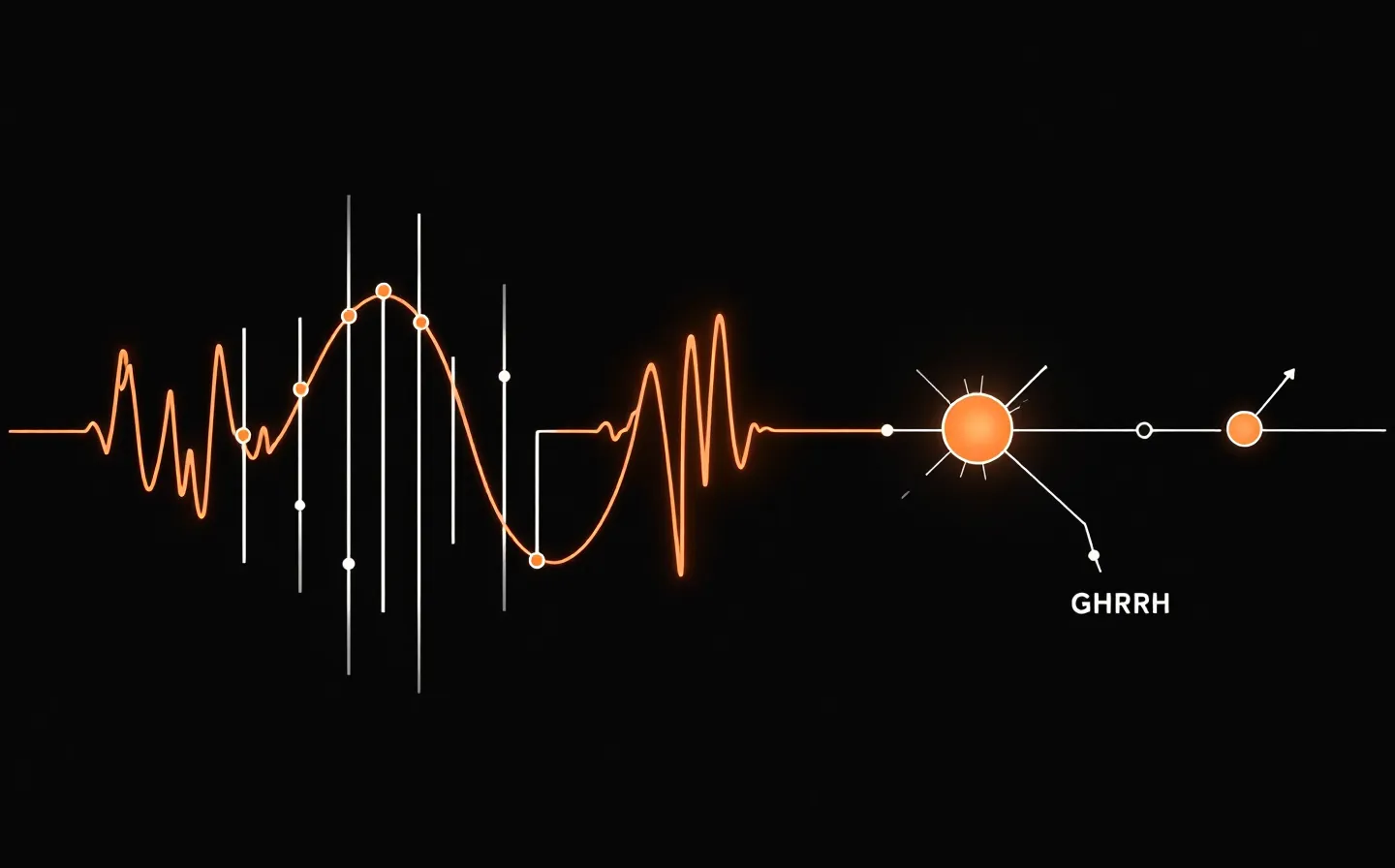
Why did researchers make tesamorelin?
Researchers copied one of the body’s growth signals. They changed it so it wouldn’t fade so fast. The result was tesamorelin.
A small gland under the brain answers the shot. The gland sends growth hormone into blood. That raises IGF-1, a liver-made growth signal. Both can reduce fat stored around the organs.
One HIV trial used 2 mg each day. That organ fat fell 15.2% in 26 weeks [1]. Approval covers only that HIV use. For you, the narrow approval is the key fact.
What is tesamorelin, in plain words?
Tesamorelin is a peptide, a brief row of protein pieces [8]. Researchers changed one end. The change helps tesamorelin remain in blood a little longer.
A substance in the body normally breaks down the natural message. It can’t break down tesamorelin as fast [8]. The small gland under the brain has more time to respond.
The United States approved tesamorelin in 2010 [5]. Its approved use is narrow. It treats people with HIV who carry extra fat around their organs.
A 2013 review found no other approved drug for this HIV problem [6]. Other uses aren’t approved and remain under study [14]. The liver signal is called IGF-1. You can read how tesamorelin works and what the research shows here.
Why is tesamorelin called a peptide?
Peptides are short chains of protein parts. Tesamorelin has forty-four amino acids in its chain [8]. It isn’t a steroid or a common weight-loss shot. It copies one natural growth message.
A substance in the body breaks down that natural message. The change slows that work [8]. Tesamorelin therefore lasts longer in blood. The next blood signal is called IGF-1.
Tesamorelin is about fifteen protein parts longer than sermorelin. Their different lengths help explain how each drug lasts. Tesamorelin vs sermorelin gives the study facts.
What does tesamorelin do in the body?
Tesamorelin reaches the small gland beneath the brain [4]. The gland sends out growth hormone. That hormone raises IGF-1, a growth signal from the liver. Both help draw on deep belly fat.
A 26-week trial followed 412 adults with HIV. They received 2 mg each day. Their deep belly fat fell 15.2%. It rose 5.0% with placebo, a shot containing no tesamorelin.
Triglycerides, one kind of blood fat, also fell. The drop was 50 milligrams per deciliter. Doctors call each tenth of a liter a deciliter. IGF-1 rose 81.0% [1].
The drug doesn’t add growth hormone itself [4]. Fat under the skin changed little [13]. See doses studied in trials and tesamorelin side effects next.
Tesamorelin mechanism of action: what happens inside?
The shot reaches a small gland under the brain. Tesamorelin fits one matching place on that gland [4]. Growth hormone then leaves the gland in its usual bursts.
Next, the liver makes IGF-1, another growth signal [6]. Together they help draw on fat stored around the organs. The first response starts under the brain.
Researchers checked these steps in 13 healthy men. Each man received 2 mg daily for two weeks. Night growth hormone rose [4]. IGF-1 rose by 181 millionths of a gram in each liter of blood.
That figure was a blood-test reading, not a dose. Blood sugar use didn’t clearly change. A body substance also breaks tesamorelin down more slowly [8]. The IGF-1 rise showed that the liver had responded.
Is tesamorelin a steroid? No, and here’s why
Tesamorelin isn’t a steroid. It is a peptide made from forty-four protein parts [8]. Steroids and peptides are different kinds of drug. Their make-up and jobs don’t match.
Tesamorelin also isn’t a common weight-loss shot. It works through the body’s growth-hormone system [4][6]. That system raises IGF-1, a liver-made growth signal.
IGF-1 helps the body use fat around the organs. You may hear these drugs grouped together. The shared label doesn’t make them alike.
Is tesamorelin FDA approved, and for whom?
Yes, but the approval is narrow. The United States approved tesamorelin in 2010 [5]. It treats extra organ fat tied to HIV in adults. The drug guide found liver harm unlikely in the trials [5].
Other uses aren’t approved. That includes broad weight loss and help with aging [14]. It also includes memory claims and non-HIV fatty liver.
A 2013 review found one approved drug for this HIV problem [6]. That drug was tesamorelin. Your own use may fall outside the approved use.
How fast does tesamorelin leave the blood?
A study described fast drug removal as 1,060 liters an hour. That figure doesn’t mean blood leaves the body. It is a math estimate of how quickly tesamorelin clears.
By day 14, the body took in 13% more from each shot than on day 1 [16]. The study didn’t call that better or worse. Drug guides say half is gone in 26 to 38 minutes.
The body’s response lasts longer than the drug. IGF-1, the liver growth signal, stays raised between shots [16]. That helps explain why trials gave daily shots.
You can read how fast the blood loses the drug. For you, the useful point is plain. The drug leaves blood before its effect ends.